Cups cause more phone calls than cheese. I run the order desk at a mid-size food and drink distributor, and next to the food we sell the foodservice packaging that cafes and restaurants buy with it: cups, lids, takeaway boxes, napkins, the lot. Cheese orders are usually clear enough. Disposables are where the guessing starts, because one word on an order can mean a single item, a sleeve or a whole case, and the buyer almost never says which.
If you’re a packaging distributor, you take that call even more often than I do. Some of the guessing can be handed off: there’s software now that reads each order and matches every line, pack size included, to your own product list, then asks a person when it can’t tell. It’s only as clear as the list it matches against, though, and that list is where packaging orders really go wrong.
“500 cups.” Which 500?
Picture the line in the email: 500 cups. Which 500 do you send?
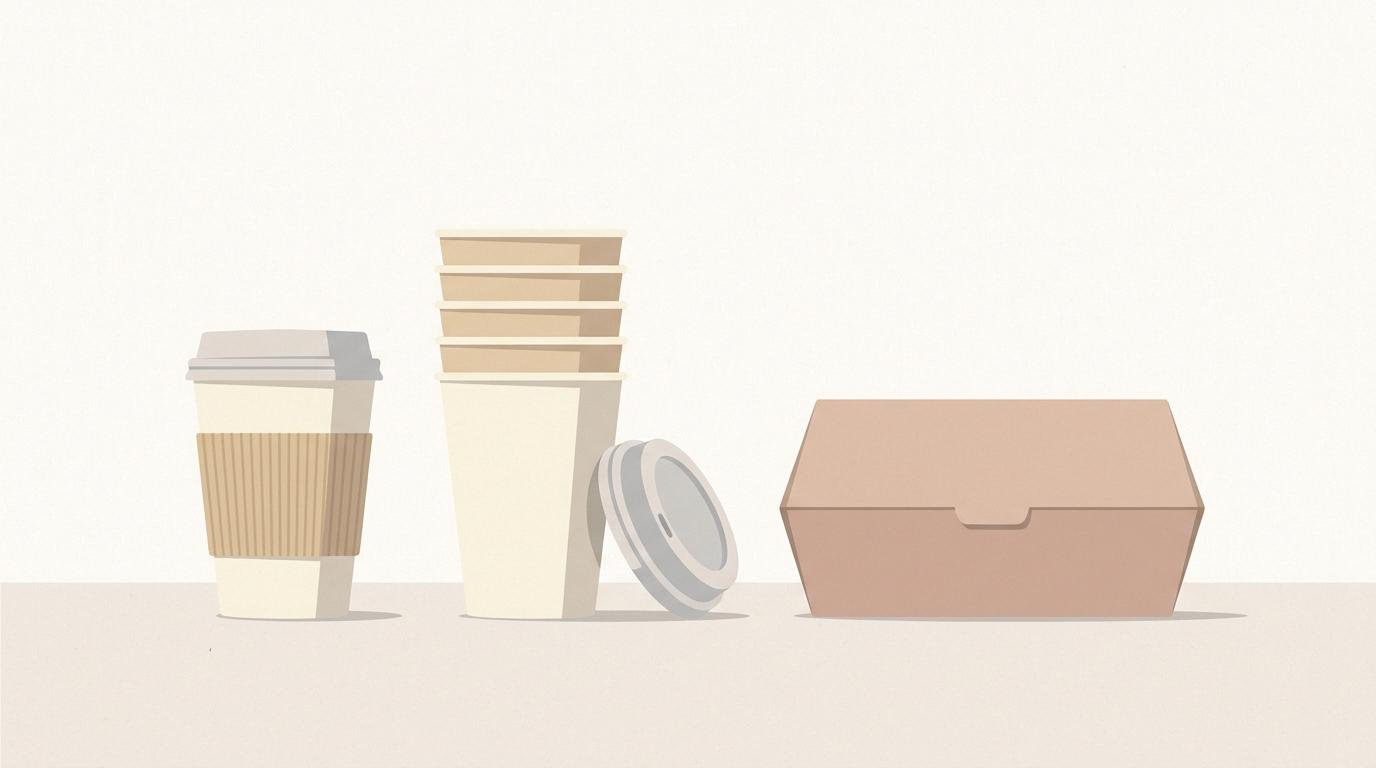
Our sleeves hold 50 and our cases hold 1,000, so that line could mean a stack of sleeves, half a case, or that many cases turning up on pallets. A small cafe that gets through a sleeve a day probably means singles. For a bakery with a few shops, it might be half a case. And now and then someone really does mean cases, because they’ve always bought cases and to them the unit is obvious. The buyer knows exactly what they meant. Nothing on the line says it.
How often do you pick up the phone over this? On our desk, more of those calls are about pack size than about which product the buyer wants (a short buyer checklist helps, see here).
Same size on paper, different cup in your hand
Then there’s the 12 oz problem. We stock a regular 12 oz cup and a 12 oz squat, and they hold about the same coffee, but they aren’t the same cup. In our range the squat one is shorter and wider at the rim, so it takes a different lid. Send the wrong cup for the lids a cafe already has and they find out first thing in the morning, with a queue at the counter.
Which is why I have a drawer. It’s the bottom one at my desk, and it holds one of every cup and one of every lid the warehouse stocks, loose and rattling around. When an order says “lids for the big cups” and I’m not sure which big cups, I take them out and press them together until one clicks. My colleagues find this hilarious. Someone stuck a strip of tape on the front that says “Marco’s museum”, and I’ve left it there, because honestly, fair. That drawer has stopped more wrong deliveries than any note in our system.
Lids are worse than cups, by the way. A lid fits one rim size, and buyers order lids as if they fit everything.
And some buyers don’t order by size at all. They order by whatever’s printed on the box in their storeroom, which might be the manufacturer’s name, a range name, or a code from somebody else’s catalogue. Unless you happen to stock that exact brand, your order desk is now doing translation.
None of that is carelessness. Buyers read off what’s in front of them, and that’s a box, not your product list.
Put the pack size where nobody has to guess
The fix that works is boring. Every packaging line in your product list should say what one unit of it is, right in the name: single cup, sleeve of 50, case of 1,000. Then whoever reads a vague cup order, a person or software, can see the options side by side and ask the right question instead of guessing.
I found the limit of this the hard way. The first time a cafe got a full case of lids when they’d asked for one sleeve, I took it personally. I spent that weekend renaming every packaging line in our product list with long descriptions: material, rim size, colour, pack count, which cup it fits. On Monday nobody on the desk could find a thing. Searching “lid” brought up a wall of near-identical sentences, with the useful bit cut off on screen. By Wednesday I’d undone about half of it, a bit red-faced.
What survived was the pack size at the front of each name and a short note on which lid fits which cup. Keep names short enough to read at a glance. Try this on your own list: if two lines differ only by pack and you can’t tell them apart in a second, can anyone reading orders against them?
“The cups that fit the lids I already have”
That’s a real order line, give or take a word, from a cafe owner a while back. No size, no unit, no brand, and to be fair to her, she was looking at her shelf.
I rang her. She didn’t know the size either, so she read me the tiny lettering pressed into the edge of a lid while I sat with the drawer open, holding lids up one at a time until her description matched one of mine. It was the one with the little sip hole set off to the side. She wanted a sleeve.