
Around 70 orders reach our order desk before 7 a.m. on a normal weekday, and hardly any two look alike. Some are tidy emails from restaurant groups with a purchasing person on staff. Others were typed by a chef with one thumb, after the last table went home.
I run operations for a food distributor that mostly serves restaurants. In practice that means I sit between the warehouse, the trucks and the office, and get blamed by all three in rotation. Before that, I drove a delivery route for years. That part shapes how I see the morning, because I know where a mistake made at a desk ends up. It ends up on a hand truck at a kitchen back door, with a cook staring at it like you insulted his mother.
Keeping that from happening is most of my job now. Nearly all of it gets done in the first hour of the day, at a desk, long before anyone touches a pallet.
What’s in the inbox before the coffee is done
Wholesale food ordering looks orderly when you see it from the outside. A restaurant says what it needs, you pick it, and you deliver it. From the order desk, it looks more like translation work, done against a clock with a warehouse waiting for paper.
Emails are mostly the easy ones to deal with. A restaurant group with a buyer sends a clean list with our item codes, quantities and a delivery date. Even then, someone has to check the codes are current. We dropped a fryer oil in the spring, and a few accounts kept ordering it by its old number for weeks. Independent restaurants are looser. Their chef writes “romaine, cream, usual onions, more lemons than last time” and trusts us with the rest. We’re supposed to know that means romaine hearts rather than whole heads, and quarts of cream rather than half gallons. Usually we do know.
That knowledge lives in the heads of the people at the desk. In my opinion it’s the most valuable thing in the building, and it never shows up on a balance sheet. When one of those people goes on vacation, I find out exactly how much of it there is.
Then come the photos, and there are more of them every year. A sous chef counts the walk-in, writes the list on the back of a prep sheet, and sends a picture. What we get is a handwritten list on a steel prep table, shot at an angle under fluorescent light, with a thumb over the bottom line. That is a document type all its own.
You learn to read the regulars’ handwriting the way you’d learn a cousin’s accent. One cook’s M and N look identical. And “chix” means boneless thighs at one account and whole birds at another.
Standing orders look like the safest orders we have, and they are where the morning gets slippery. Plenty of our accounts get the same delivery every week, built in advance so nobody has to send anything. That works well until a chef changes the menu and texts the change late at night to whoever he has a number for. It reaches the desk line once in a while, but more often it goes to a driver, a sales rep who is asleep, or me.
Back in my driving years I was on the receiving end of that once, with my fingers numb through my gloves. I wheeled a stack of frozen fries up to the walk-in, and the chef met me there shaking his head. He had texted somebody on Sunday night, and nobody ever found out who.
A last-minute change to a standing order is the riskiest message of the morning, because the default already sits in the system. If nobody catches the text, the warehouse picks exactly what it picked last week. Nothing on the ticket looks wrong, so nobody downstream has a reason to ask. The case gets loaded, the driver delivers it, and the restaurant receives salmon it told us the night before it didn’t want.
Whatever shape an order arrives in, someone at our desk reads it and works out which of our items the customer means. They check the quantity and the unit, confirm the price on that account, and key it in before the pick tickets run (see here for doing that without retyping).
Of those steps, the matching takes real skill. Our catalog has several kinds of romaine, a handful of fryer oils and enough cheddar to confuse anyone. Customers rarely use our names for any of it, so a chef who writes “cheddar” might mean a block, a case of blocks, or the shredded bag. The wrong guess prints on the same clean ticket as the right one.
If you run a desk like ours, none of this is news to you. Your best order-entry person probably types no faster than anyone else. She just knows what “usual onions” means at each account without opening a single old order.
Then there are the outs, which every desk handles a little differently. When we’re short on something, the desk picks a substitute and decides whether the chef needs a call before the truck leaves. Swapping in another brand of canned tomatoes usually goes through without fuss. A different size of anything a chef portions, like chicken or fish, needs a call every time, because his plate costs were built around the size he ordered.
I’ll admit something that annoys my own team. Every order that arrives digitally, I still print. Then I read each one with a pen in my hand, ticking lines and circling anything odd. It’s slower, and I know it’s slower. Walking to the printer and shuffling paper costs minutes I don’t have at that hour. My desk ends up looking like a tax office in April. On a heavy Monday the stack is thick enough to staple, and the printer jams at least once a week, always at the worst moment. But the pen is how I notice things. On a screen my eyes skim, and the line that says “no cream this week” slides right past.
6:30 doesn’t care how messy the inbox is
Our pick tickets run at 6:30 so the warehouse can build loads before the trucks leave. Anything that lands later waits a day, or gets squeezed in by someone walking the aisles with a printout, pulling cases onto a pallet that was already wrapped. Restaurants know the cut-off as well as we do, and they also know a call to the right person usually bends it. They’re right to try, because a kitchen without fries on a Friday night starts calling other distributors by Saturday.
From my window I can watch the first refrigerated truck back into the dock while the sky over the parking lot turns orange. Every unclear line still on my desk at that moment is a guess about to leave the building.
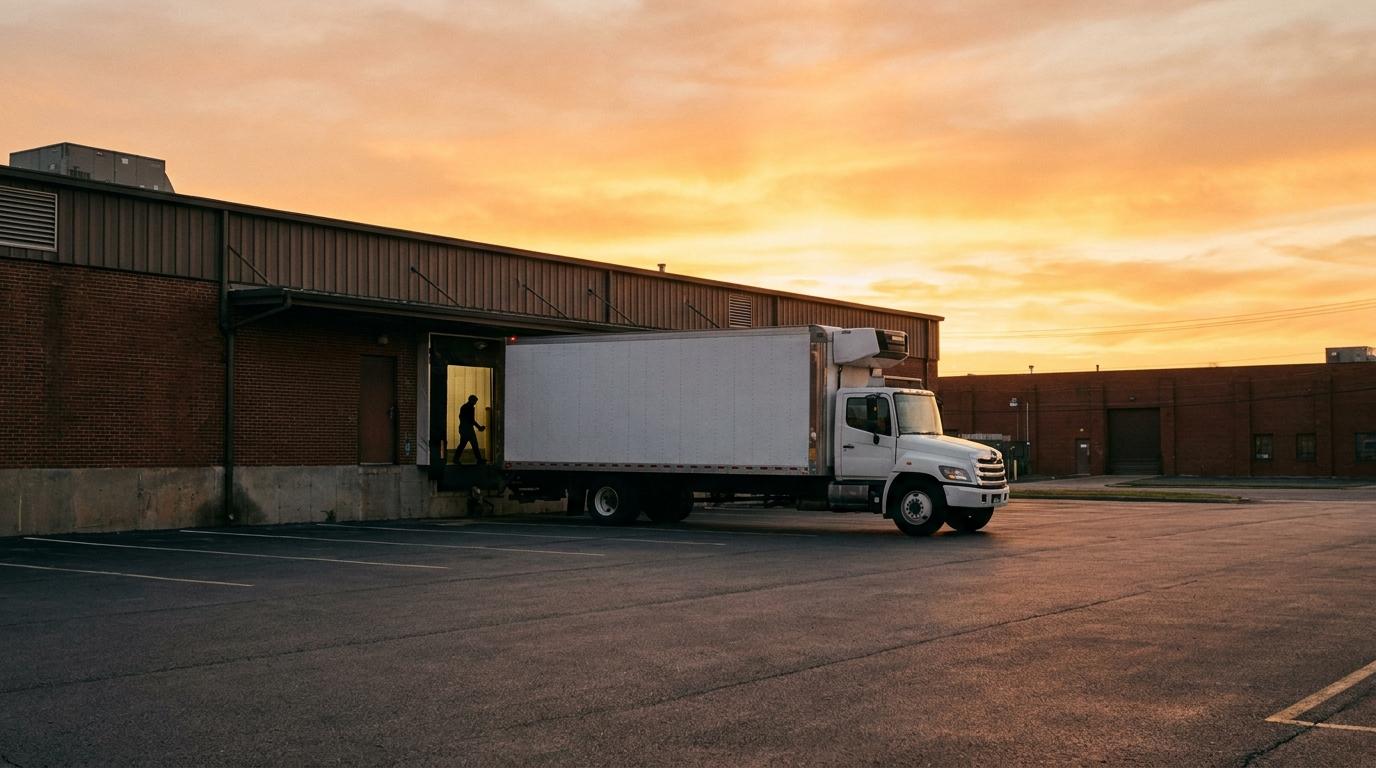
“By the time it’s on my truck, it’s already wrong”
When I drove, my first stop most mornings was a bistro whose back door was still locked at 5 a.m. I’d stand in the alley with the hand truck, breath showing in the cold, knocking until a dishwasher finally heard me over the kitchen radio. One morning the chef let me in himself and looked at the case of portion-cut chicken breasts. Then he sent it straight back out to the truck. Wrong size. He’d ordered the larger cut, and the ticket in my hand said the smaller one. There was nothing I could do about that from an alley.
One of our drivers put it better than I ever have, standing at the dock door holding the wrong mayonnaise, gallon jugs instead of portion cups. “By the time it’s on my truck,” he said, “it’s already wrong.” That wasn’t a dig at the warehouse, which had picked exactly what the ticket said. He meant someone at a desk had misread a message hours earlier, and he set the jugs down on the dock to wait for a call back.
The dock still takes the blame, because the dock is where the mistake becomes visible. A chef never sees our inbox or our pick tickets. He sees a driver holding the wrong box, and that’s who he remembers. Drivers carry a lot of mistakes they didn’t make, and most of them have stopped arguing about it.
That sentence from our driver changed how I run the desk in the mornings. Last year we read orders in the sequence they arrived, top of the inbox to the bottom. A standing-order change got the same treatment as a brand-new order. Now changes get read first, before anything else. Any line we can’t match with confidence gets a phone call instead of a guess. We also stopped treating a text to a driver as an order until someone at the desk had it in writing. Calls feel slow when the clock is running. Even so, my time fixing tickets after they print went from about 40 minutes a morning to about 25. The drivers noticed before I said a word.
Look closely at where a wrong case comes from, and it’s almost never laziness or a careless picker. It’s a chef’s shorthand, an old item code, a unit nobody wrote down, or a text that went to the wrong phone. Sometimes it’s a perfectly clear order for an item we stopped carrying. Each of those has to be caught by whoever reads the message first, usually somebody at our desk with a coffee going cold next to the keyboard.
That’s also why I’ve started paying attention to software built for the reading and matching step. There are now tools that read emailed orders and phone photos and match each line to your own product list and prices. The sensible ones ask a person when they aren’t sure instead of guessing, and that’s the part I care about. No tool will know on its first morning that “chix” means thighs at one account, so my team would check everything it flags. A first pass that sorts clear lines from questionable ones would hand my desk back the minutes we lose on easy stuff. I’d print the questionable ones anyway, and go at them with a pen.
A Saturday at the breakfast table
Last Saturday I was up before everyone else, at the kitchen table with coffee and my phone, scrolling through Monday’s standing orders because a steakhouse account had texted a change overnight. My daughter came down at 6:15 in socks and a hoodie that used to be mine. She climbed onto the chair across from me and watched without saying anything. The house was quiet except for the fridge humming.
“Why are you reading orders on a Saturday?” she asked.
I started explaining about cut-offs and standing orders and the salmon nobody wanted. Then I stopped, because none of it answered her question. After years of hearing me on the phone with drivers, she has a fair idea of how a distributor runs. What she wanted to know was why the job was at our kitchen table at that hour, before the sun was fully up, and I didn’t have a good answer.
I put the phone face down on the table, next to the syrup. She asked for pancakes, and I made them, badly. The steakhouse change waited until Monday morning, when I printed it out and read it at my desk with a pen in my hand.