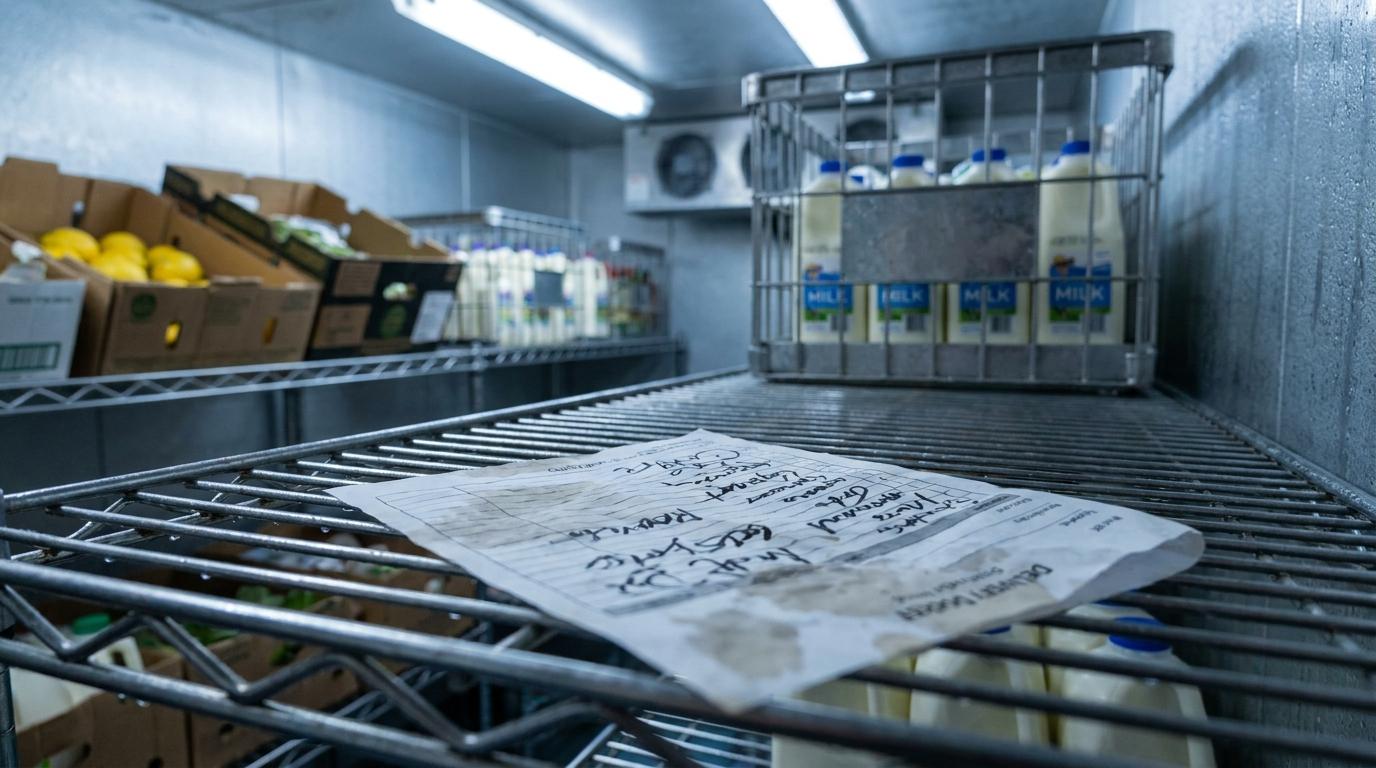
The back of a delivery docket was my order form for longer than I would like to admit. When I was buying for a small group of cafes, I would stand in the walk-in at closing with the compressor humming behind me, the floor still damp from the mop, and write the next morning’s order in black Sharpie across whatever paper the last driver had left. Milk, eggs, the good butter, a case of lemons if the bar had been squeezing through them, all scrawled in letters that got worse as my fingers went numb. Then I would photograph the docket under the flickering fluorescent strip and email it to the supplier with my battery at 4%. More than once that photo went out with my thumb in the corner.
If you run a distributor, you have received that email and squinted at it over your first coffee, trying to decide whether the smudge says butter or batter.
I am not proud of it, but the way a buyer orders at the end of a long shift is not a habit you can train out of her with a nicer form. Kitchens run on whatever is nearest to hand. Email is nearest, and so is a text, and so is a photo of a scribbled list, and every one of them works from inside a cold room with wet gloves on.
Another login, another password I will forget
The week a supplier asked me to start ordering through what their email called a “B2B order portal“, I took it personally. Picture it: the dishwasher clanking through its last rack, and an email arriving with a welcome link, a temporary password and a cheerful note about how much easier everything would be. The link wanted a new password with a symbol and a capital letter, then it sent a verification email that landed in my spam folder, then it logged me out while I was hunting for the right case size of oat milk. By the time I found the reset email, I was sitting on an upturned crate by the back door, smelling of fryer oil and absolutely furious. That night I opened a spreadsheet and seriously priced up moving our whole dairy order to another supplier, over a login screen.
It was a ridiculous reaction, and I knew it while doing the maths, but it is exactly how a buyer feels when an ordering change lands on top of a shift that already asked too much of her.
Portals are at least something a person can click through. EDI, short for electronic data interchange, is a way for two companies’ computer systems to swap orders and invoices directly in a fixed format, with nobody typing anything in between. Big restaurant chains and grocery groups use it because they have a purchasing team, IT staff and a central system that knows every product code, so a machine talking to a machine saves them real hours. A corner shop has a counter, a till and an owner who does the ordering from her phone after the shutters come down.
Every EDI vs email comparison I have read since skips this part. For a small buyer, neither a portal nor EDI removes any work; they move it onto her, for a benefit that mostly lands on your side of the counter. She has to learn your login, your product codes and your pack sizes, then do it again for every supplier with the same bright idea. Email asks nothing of her except words she already knows.
Push hard enough and most small buyers will not argue with you. They will quietly keep another supplier warm, send a little more of the order there each week, and you will only notice when the numbers drop.
Let them keep sending the photo
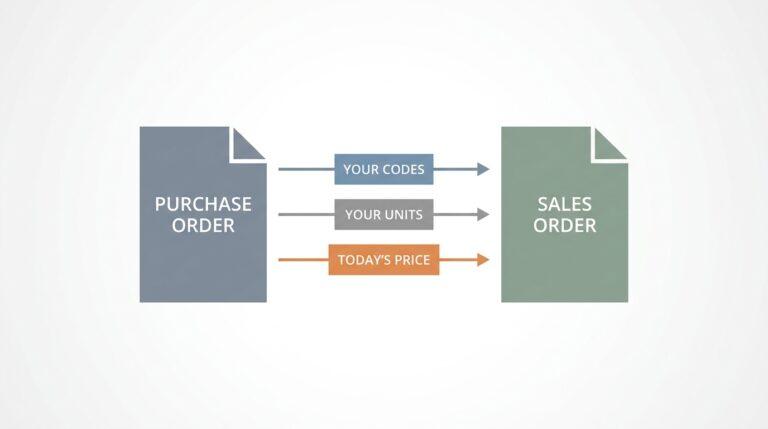
What I wish my suppliers had understood is that the mess was never the email itself, it was the retyping that happened after it reached their order desk. Somebody on your side has been reading my handwriting and keying it into your system before the trucks load, and that person deserves better than my thumb in a photo. There are tools now that read an emailed order, a PDF or a phone photo of a docket, match each line to your own product list and prices, and ask a person only when a line is genuinely unclear; that is the idea behind Botowski’s order processing, which turns those messy messages into clean files your system can import. Your buyer changes nothing, and your team stops keying every line by hand.
I still think about the version of me in that cold room, phone dimming, marker squeaking across the docket, and how little she needed beyond an inbox that would take her order the way she could give it (more on that here). Every distributor who kept saying yes to that inbox kept my business, even on the nights my handwriting looked like a ransom note. So before you send your buyers that welcome link and temporary password, ask yourself honestly: whose evening is the new system actually making easier?